Fashion is having a personality moment, and I’m here for it!
After years of quiet luxury, neutral capsule wardrobes, and understated dressing, we’re seeing a return to something much more expressive.
Color! Pattern! Texture! Personality!
Enter maximalist fashion, where more is more, creativity takes center stage, and getting dressed becomes an opportunity to have some serious FUN.
One of my favorite ways to embrace this expressive approach to dressing is through print mixing.
Stripes with florals? Checks with animal prints? Two completely different bold patterns in the same outfit?
Absolutely!
The secret to successful pattern mixing isn’t about following a complicated set of fashion rules. It’s about understanding how colors, shapes, scale, and textures work together.
And here’s something that might surprise you: Understanding your personal color palette through color analysis can make mixing prints significantly easier.
Let’s explore how to wear mixed prints confidently, whether you’re a creative maximalist or someone who prefers a more classic, understated approach.
How do you mix prints?
The first rule of print mixing is to find a common thread between the patterns you want to wear.
Patterns don’t need to match exactly. They simply need to share something that creates a visual connection.
Here are five elements to look for:
- Color: Two different prints share one or more colors.
- Scale: The patterns have a similar size or proportion.
- Shape: The prints feature related shapes, such as geometric squares, rounded motifs, or organic lines.
- Dimension: The thickness of stripes, lines, or other pattern elements is similar.
- Texture: The fabrics share a similar surface quality, weight, or drape.
Here’s the fun part.
Only one element, ideally color, needs to connect your prints. Everything else can vary.
However, the more elements they share, the more intentional the finished outfit will generally look.
Print mixing example: Botanical prints with abstract patterns
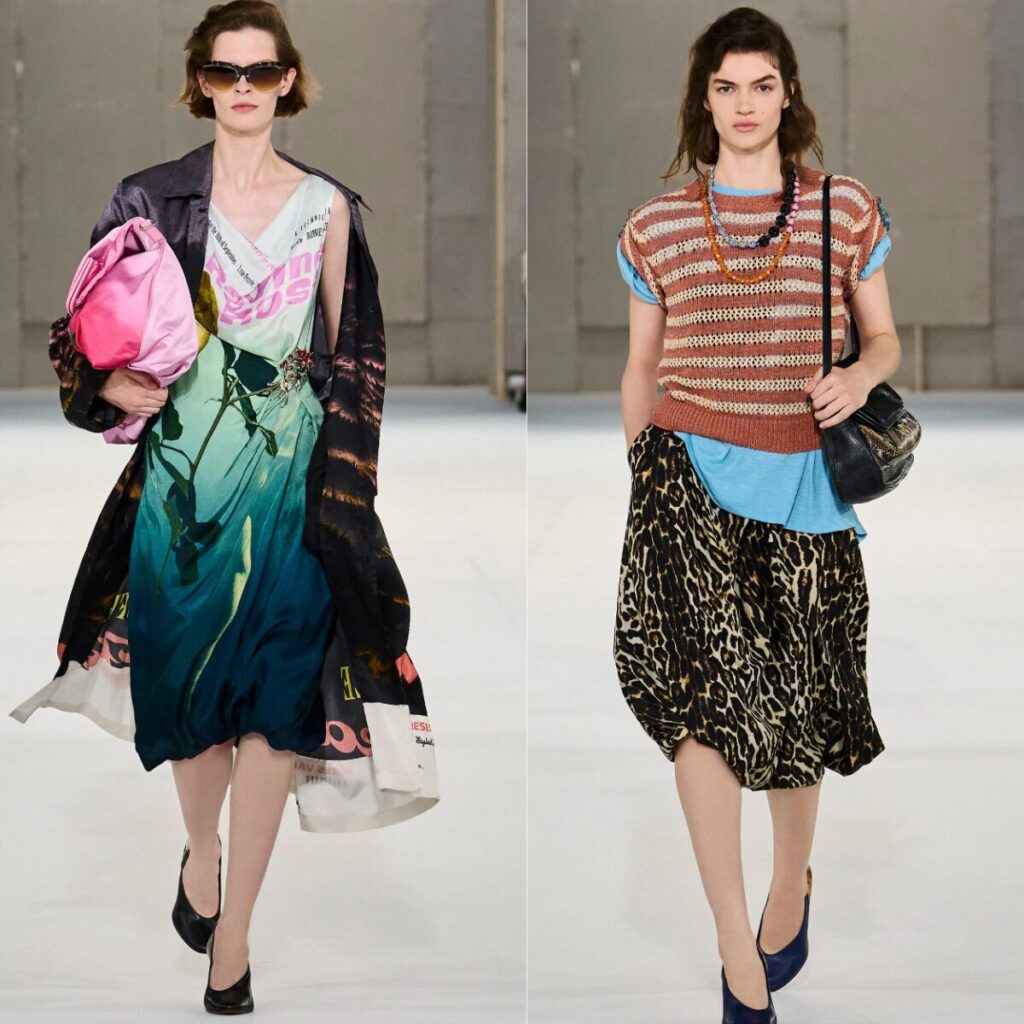
Look at the runway outfit on the left.
The dramatic botanical print dress is paired with a long duster featuring an abstract, painterly pattern.
Although the prints are completely different, they share an organic, free-flowing quality.
Both patterns are relatively large in scale, featuring irregular shapes rather than structured geometric motifs.
The lightweight, silky drape of the fabrics also creates a connection.
The darker, abstract duster beautifully frames the statement botanical dress without competing with it.
This is a wonderful example of how pattern mixing can work through shape, scale, movement, and texture—not just color.
Print mixing example: Stripes with animal print
Now look at the outfit on the right.
A multicolored striped knit is paired with a dramatic leopard-print skirt.
At first glance, they seem like unlikely companions.
But look closer.
The warm caramel, rust, cream, and brown tones in the sweater relate beautifully to the warm colors of the animal print.
The patterns also have a similar visual scale.
And here’s where color analysis becomes especially interesting.
Both pieces share three important color characteristics:
- Undertone: Predominantly warm
- Value: Medium to dark
- Intensity: Relatively soft and muted
These shared characteristics help create harmony between two very different prints.
The bright blue T-shirt adds an unexpected pop of contrast, while the accessories pick up colors from the outfit.
The result is eclectic, creative, and completely intentional.
Styling tip: When you’re experimenting with two strong prints, look beyond the pattern itself. Consider the colors, their intensity, and the overall visual weight of each piece.
Can you put two different prints together?
Absolutely! And you don’t have to limit yourself to just two.
One of the easiest ways to experiment with mixing patterns in clothing is to start with one statement print and pair it with smaller, quieter patterns.
Think of a bold floral skirt worn with a fine-striped shirt and a subtle checked jacket.
The smaller patterns almost act like neutrals, allowing the statement print to take center stage.
But you can also pair two equally strong prints together, especially when they share an underlying color relationship, shape, or scale.
Mixing bold prints with subtle patterns
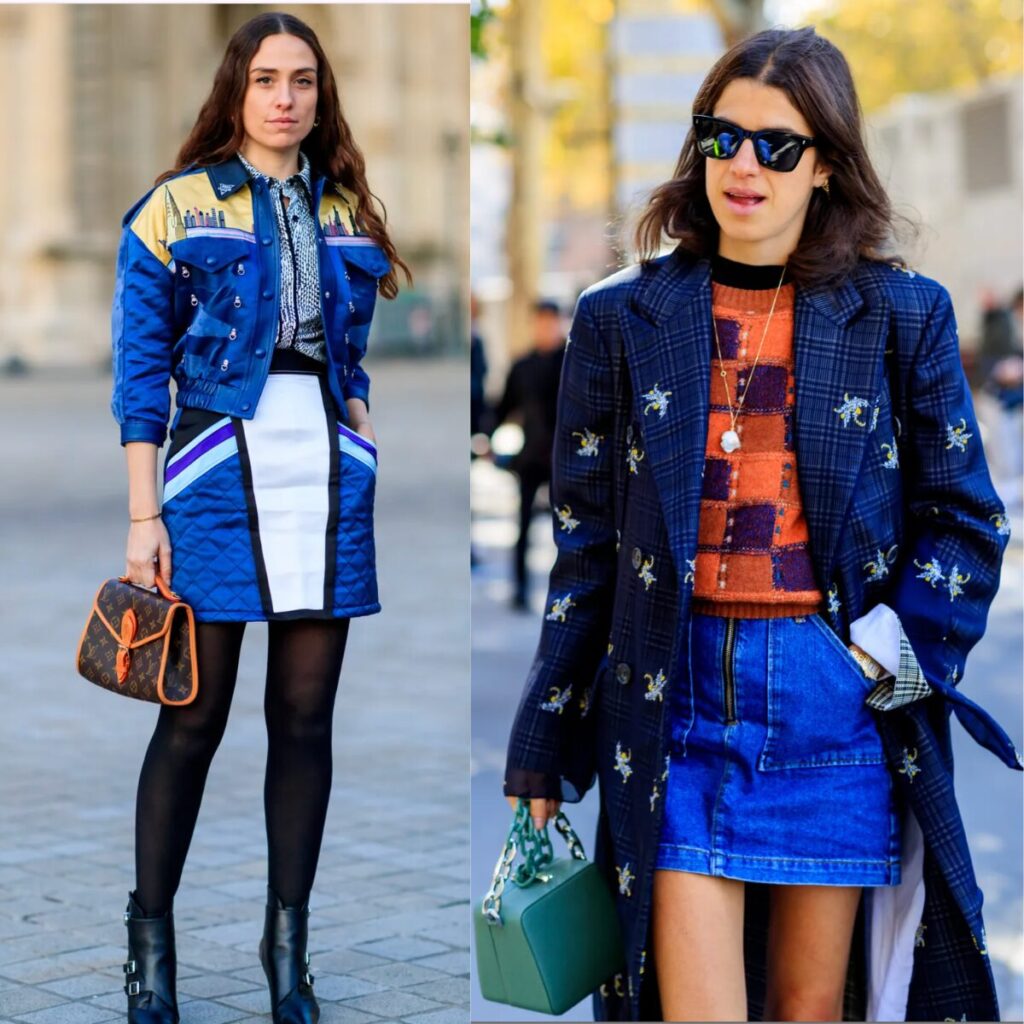
Look at the outfit on the left.
The vibrant blue jacket with its colorful graphic design is layered over a tiny black-and-white patterned blouse.
The jacket is clearly the statement piece.
The small-scale pattern of the blouse adds interest without competing for attention.
The bold blue sections of the skirt repeat the color of the jacket, creating a cohesive look.
Now consider the outfit on the right.
A navy plaid coat with delicate embroidered motifs is layered over a striking orange-and-purple checked knit.
Notice the recurring geometric shapes.
The checked coat and sweater establish a square-pattern theme, which is echoed in the angular pocket detailing, structured handbag, and even the sunglasses.
The deep blues in the coat, sweater pattern, and denim skirt also help connect the pieces.
There is a lot happening, but it works because the individual elements have relationships with one another.
The takeaway? Pattern mixing isn’t about everything matching. It’s about creating visual relationships.
Start with small patterns
If you’re new to wearing mixed prints, start with subtle patterns.
Small dots, tiny checks, fine stripes, and delicate textures are remarkably easy to coordinate.
Why?
Because from a distance, smaller patterns often read almost like solid colors.
A fine navy pinstripe can function much like a plain navy jacket.
A tiny black-and-white check can pair beautifully with a large floral, bold geometric print, or animal print.
Start with one subtle pattern and one stronger statement print.
Once you’re comfortable, introduce a third.
What patterns do not go together?
This is one of the most common questions about print mixing.
And the answer might surprise you.
There aren’t really any patterns that are automatically off-limits together.
Florals can work with stripes.
Checks can work with animal prints.
Polka dots can work with geometric patterns.
Even two large, bold prints can create a beautiful outfit.
What makes pattern mixing more challenging is when the prints have no obvious relationship in color, scale, shape, or visual character.
For example, combining several very strong patterns with completely unrelated colors, scales, and textures can create visual competition rather than harmony.
That doesn’t make the combination wrong. It simply means you’ll need to be more intentional about how you style it.
Here are three ways to create cohesion:
1. Repeat a color. Find one color that appears in both patterns, even if the designs are completely different.
2. Create a relationship in scale or shape. Pair similar-sized patterns or repeat a geometric or organic design element.
3. Balance the visual impact. Let one bold print dominate, and use smaller patterns to support it.
Remember, the goal isn’t necessarily to make an outfit look quiet.
The goal is to make it feel intentional.
How does color analysis help with pattern mixing?
This is where things get really exciting.
If you’ve ever wondered why some colors mix beautifully while others seem to fight one another, understanding color analysis can make a huge difference.
When you know your personal color palette, you have a built-in foundation for coordinating clothing, accessories, and prints.
Rather than guessing whether two patterns go together, you can look at the color characteristics they share.
There are three important characteristics to consider.
1. Undertone: Warm or cool
Colors generally have warm, yellow-based or cool, blue-based undertones.
Warm colors might include rust, caramel, golden yellow, and warm coral.
Cool colors might include cobalt blue, icy pink, raspberry, and cool red.
When two different patterns share a similar undertone, they often coordinate more easily.
For example, a warm rust floral can pair beautifully with a golden-brown animal print.
Or a cool red geometric print can work with a vivid pink stripe.
2. Value: Light or dark
Value refers to how light or dark a color appears.
A wardrobe filled with mostly light, medium, or dark colors tends to offer natural opportunities for coordination.
However, you can also create beautiful combinations by deliberately contrasting values.
Think of cobalt blue paired with icy blue.
Both colors can share a cool undertone and clear intensity, while their different values create a beautiful tonal contrast.
3. Intensity: Bright or soft
Intensity describes how clear and vibrant a color is versus how soft, dusty, or muted it appears.
Bright, saturated colors often work beautifully together.
Think vivid red with hot pink, or cobalt with emerald green.
Likewise, softer colors such as sage, dusty rose, muted lavender, and taupe can create a harmonious combination.
The magic happens when your prints share one or more of these color characteristics.
The more consistent the undertone, value, and intensity, the easier it generally becomes to combine seemingly unrelated patterns.
And when you know which colors flatter you personally, you’re no longer choosing prints simply because they’re fashionable.
You’re building a wardrobe where the colors naturally work together—and work for you.
Not sure which colors belong in your personal palette?
[BOOK YOUR PERSONAL COLOR ANALYSIS HERE]
Pattern mixing with accessories
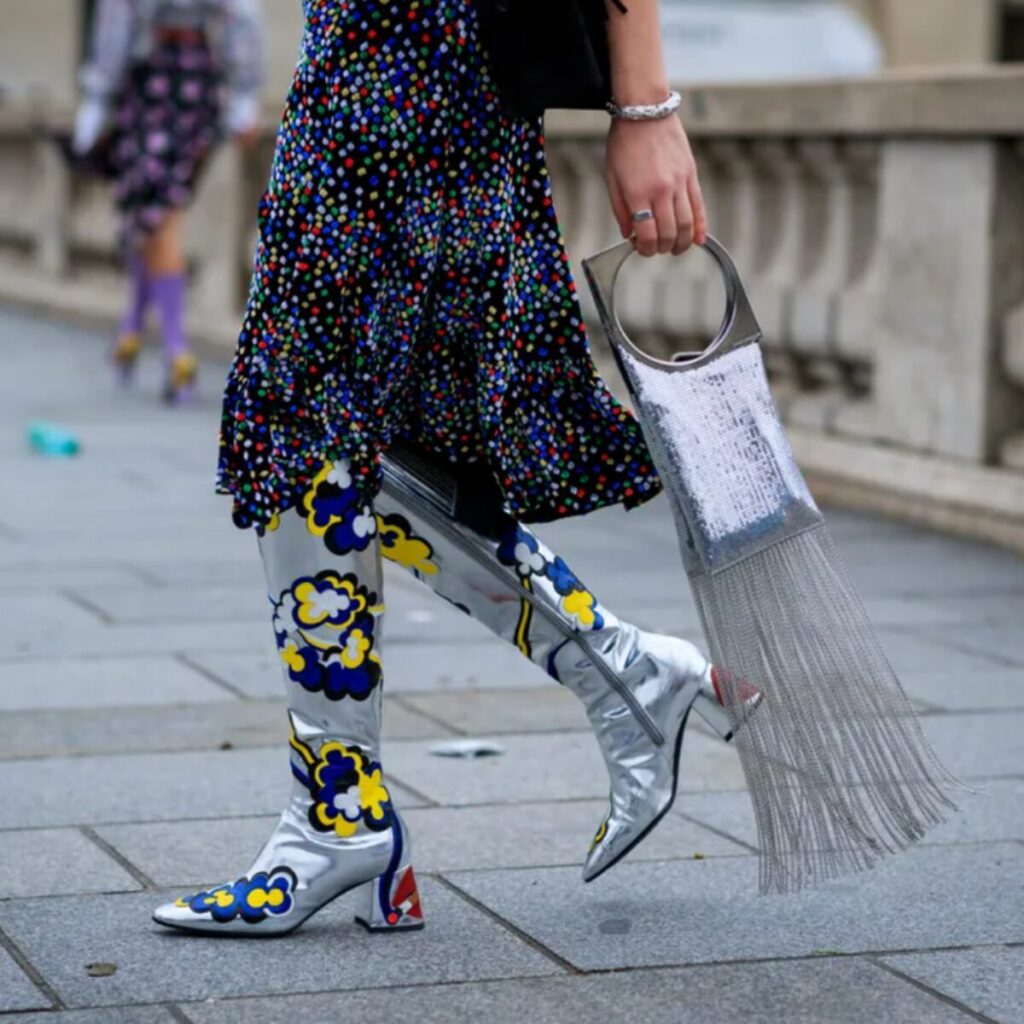
Print mixing doesn’t have to stop with your clothing.
Shoes, handbags, scarves, and other accessories are wonderful opportunities to introduce another pattern.
Take this playful street-style outfit.
A multicolored dotted skirt is paired with metallic silver boots featuring oversized blue, yellow, and white flowers.
The prints have completely different shapes and scales.
But look at the colors!
The bright blue and yellow in the boots echo the same colors scattered throughout the skirt.
That repeated color creates the connection.
The metallic silver adds another interesting texture without taking away from the colorful mix.
This is a perfect example of how color can unite two very different prints—even when almost everything else about them is different.
Are mixed patterns still in style?
Yes! And they’re especially relevant as maximalist fashion returns to the spotlight.
After years of minimalism and quiet luxury dominating the fashion conversation, there’s renewed enthusiasm for individual expression through clothing.
Think bold color combinations, layered textures, statement accessories, graphic prints, florals, and unexpected pattern pairings.
But there’s something important I want you to remember.
Just because something is fashionable doesn’t mean it has to be your fashion.
Not every woman will feel comfortable wearing a leopard-print skirt with a striped sweater.
And that’s perfectly fine!
Pattern mixing and your personal style personality
Women with Creative, Dramatic, or Romantic style personalities may naturally gravitate toward expressive print mixing.
If you love artistic combinations, bold colors, interesting textures, decorative details, and unexpected pairings, maximalist dressing may feel wonderfully natural.
But if your style is more Classic, Minimal, or Understated, you might prefer a quieter interpretation.
Perhaps a fine-striped shirt with a small checked blazer.
Or a printed silk scarf paired with a simple outfit.
You don’t need to wear three statement prints to participate in the trend.
The goal is to interpret fashion in a way that feels authentic to your personality.
Maximalist pattern mixing: Expressing your creativity
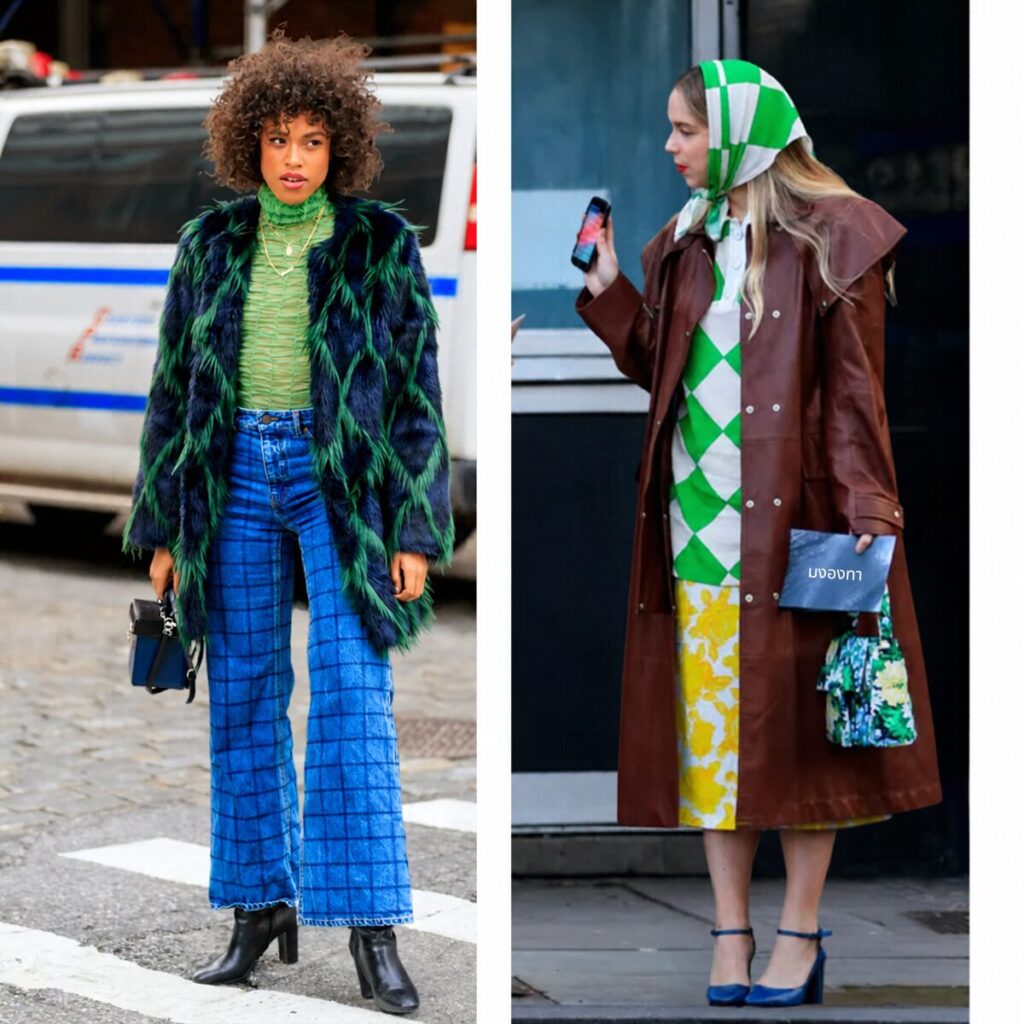
These two outfits demonstrate just how individual maximalist dressing can be.
On the left, vibrant green and electric blue form the main color story.
A dramatically textured coat, ruched top, and blue checked trousers create visual interest through texture, pattern, and color.
On the right, a rich brown leather coat grounds an outfit filled with green-and-cream diamonds, yellow floral motifs, and a multicolored handbag.
Notice how the two main clothing prints have a related scale, while the green and yellow elements create additional connections throughout the look.
Both outfits are bold.
Both are expressive.
But each communicates a completely different personality.
And that’s what makes fashion interesting.
5 easy tips for mixing prints and patterns with confidence
If you’re ready to try pattern mixing in your own wardrobe, keep these five principles in mind:
- Find one common element. Look for a shared color, shape, scale, dimension, or texture between your prints.
- Start small. Combine one statement pattern with a fine stripe, tiny check, or delicate dot.
- Experiment with two bold prints. Similar scales, colors, or shapes can help dramatically different patterns coexist.
- Use your color palette. Understanding undertone, value, and intensity through color analysis makes coordinating patterns easier.
- Honor your style personality. Choose the level of print mixing that feels authentic to you, whether that’s subtle or fabulously maximalist.
The best part? There are no fashion police!
Once you understand the principles of color harmony, pattern scale, shape, and texture, you have the freedom to experiment.
Some combinations will be subtle and elegant.
Others will be expressive, dramatic, and delightfully unexpected.
And some will make you laugh when you look in the mirror.
That’s part of the fun!
Great personal style isn’t about following every rule. It’s about understanding the rules well enough to know when to play with them.
So here’s my challenge for you.
Open your wardrobe and find two patterned pieces you’ve never considered wearing together.
Look for one thing they have in common.
It might be a color, a shape, a similar scale, or a subtle texture.
Try them on together.
You might be surprised by what works!
And remember: When you understand your best colors and your personal style personality, creating a wardrobe that’s both versatile and expressive becomes so much easier.
DISCOVER YOUR BEST COLORS — BOOK A PERSONAL COLOR ANALYSIS
Now I’d love to hear from you: Are you embracing the return to maximalism, or is quiet luxury still more your style?
Because ultimately, the most stylish thing you can wear is something that feels completely, wonderfully you.




Please Share